
Carlos Gardel circa 1933. Jose Maria Silva/Archivo General de los angeles Nacion hide caption
toggle caption Jose Maria Silva/Archivo General de los angeles NacionCarlos Gardel circa 1933.
Jose Maria Silva/Archivo General de los angeles NacionFrom the streets of Buenos Aires, Carlos Gardel's image is everywhere: the suave singer just who introduced tango, symbolic of Argentina's "Golden Age, " towards world. His life and death would be the things of legend.
"Gardel is the better, the maximum, the greatest, " claims taxi driver Miguel Angel Godinho, just who drives through Buenos Aires blasting old recordings regarding the tango maestro. "Look, We have goosebumps talking about him. I never ever get fed up with listening to him." Like numerous Portenos, because the people of Buenos Aires are understood, Godinho is still exceptionally enthusiastic about his idol, just who passed away more than 75 years ago.
Gardel spent my youth singing in local taverns, restaurants and areas in Abasto, as soon as a neighbor hood of Italian immigrants. The home where Gardel lived along with his mama is currently a museum full of pictures and artifacts: Gardel's sheet music and tools, a vintage Victrola, newspaper clippings of his international travels and motion picture posters featuring the debonair crooner.
Horacio Torres, director regarding the Carlos Gardel Museum, says Gardel ended up being a thoroughly modern-day figure just who revolutionized tango and developed a feeling within the 1920s and '30s.
"Gardel is a symbol associated with immigrant which triumphs, " he says. "He was a man through the middle-class, a neighborhood singer whom captivated society."
Overseas scholars still argue over Gardel's origins; Uruguay also promises him as its own. But biographer Oswaldo Barsky states papers prove Gardel came to be in Charles Romuald Gardes in Toulouse, France, to just one mom. They relocated to Argentina's capital as he ended up being a child.
Gardel was raised working at opera houses — Buenos Aires had five at that time — as an expert applauder which roused the viewers. He learned to sing operas and Spanish operettas, or zarzuelas, in addition to criolla songs, a folkloric style from Argentine country side. After that Gardel took it one-step more and started singing tangos, like his very first recorded struck from 1917, "Mi Noche Triste."
A Tango Revolutionary
"Mi Noche Triste, " or "My Sad Night, " is a now-classic tango story of a guy pining for the lady who refused him. The song ended up being nostalgic and melodramatic, getting the sentimentalism of Buenos Aires it self. Before Gardel's explanation, almost all tangos was in fact strictly instrumental.
"One of the greatest revolutions of tango is that recording of 'Mi Noche Triste, ' " Gardel aficionado Juan Carlos Apicella claims. "That's whenever singing tango was born. Afterwards, everybody started writing poetry for tangos."
In Argentina, the tango had started as music and dance for males in search of work through the Great Depression. But Gardel assisted popularize the design since it moved from the underground party salons into the top courses.
Photos of Carlos Gardel, like this one on a store in Buenos Aires, are spread throughout Argentina. Mandalit del Barco/NPR hide caption
toggle caption Mandalit del Barco/NPRImages of Carlos Gardel, such as this one on a store in Buenos Aires, are still scattered throughout Argentina.
Mandalit del Barco/NPR"He was the creator, " says Oscar Del Priore, creator for the National Tango Academy. "Everything that arrived after Gardel is Gardeliano." Like many followers, he makes use of Gardel as a noun, an adjective and a verb.
In 1930s, Gardel introduced tango towards remaining portion of the globe. Along with his ensemble of Argentina's best guitarists, he went on trip to south usa, France together with U.S. their star ended up being catapulted even more as he began starring in Spanish-language flicks. Gardel formed his own manufacturing company and distributed 10 films through Paramount images.
An Argentine Symbol
His very first talkie movie part was in the 1931 film Las Luces de Buenos Aires ("The Lights of Buenos Aires"). Gardel portrayed a gaucho, or Argentine cowboy. Onscreen, he embodied the archetypal Latin enthusiast with panache: a stylish gentleman with a fedora, suit and connect.
Santaolalla says Gardel's romantic music and graceful design are part of the hereditary makeup of every tango musician that implemented him.
"He's these types of an iconic figure and element of whom we are as Argentineans, " Santaolalla says. "he had been one of the biggest voices, and he has written incredible songs with great lyricism. 'El Dia Que Me Quieras' is one of the most gorgeous melodies previously written."
Santaolalla calls Gardel's composition a masterpiece.
" 'El Dia Que myself Quieras, ' 'the afternoon You Love myself' — that time, all of these incredible, magical things will happen, " he states.
Biographers state Gardel tried the electric microphone when it was initially introduced, and had been the initial Argentine musician to star into the brief music clips played before movies.
"Gardel had been a worldwide phenomenon, " claims Barsky, who notes that singer motivated masses of groupies long before The Beatles.
The singer also spurred numerous legends, including the story of exactly how he had been as soon as shot when you look at the upper body during a street brawl.
"The doctors decided it was too dangerous to work, therefore the bullet remained in his lung the remainder of his life, " street musician Juan Carlos Ivanhoff states. "On their recordings, you can easily hear him breathing thereupon round still inside the lungs. It never ever bothered him."
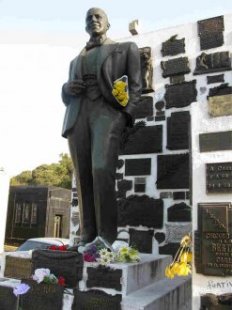
Carlos Gardel's grave site at Chacarita Cemetery in Buenos Aires. Mandalit del Barco/NPR conceal caption
toggle caption Mandalit del Barco/NPRBiographers say the storyline does work, though they dispute another an element of the legend: your gunman had been regarding another famous Argentine, the brand new Che Guevara.
'Cada Dia Canta Mejor'
In 1935, as he ended up being simply 45, Carlos Gardel ended up being killed along with his entourage and longtime collaborator, Alfredo Le Pera, while touring south usa. Their exclusive plane crashed in Colombia, in which he could be still considered a hero.
"Gardel's death was a classic tragedy, " claims Del Priore, which notes that Gardel ended up being a film celebrity struck down during the height of his profession. "it had been a fantastical demise, like their life had been."
Newsreel reports stick to the huge outpouring of love after his death: Gardel's casket was paraded through streets of Medellin before hordes of mourners. Their remains had been carried throughout the mountains of Colombia, and also by steamboat to nyc, Rio de Janeiro, Uruguay and, eventually, Buenos Aires — each end inspiring huge road memorials.
Seventy-five many years later, Gardel's popularity lives on, in Buenos Aires and past. Tango cable systems continue steadily to showcase his movies. And every Sunday early morning, local radio station Sensaciones broadcasts an hourlong tv show dedicated to him.
"Gardel is our patrimony, " says radio host Juan Carlos Apicella, who belongs to an association devoted to revealing Gardel's songs. "there's only 1 Gardel."
There is a well known Latin-American saying: "Cada dia canta mejor." It indicates day-after-day, Gardel sings better; his songs ages like an excellent wine.
Carlos Gardel had been buried at Chacarita Cemetery in Buenos Aires. His followers still trip to spend their respects, often burning a smoking they put it in the possession of of their elegant bronze statue and placing a rose in his lapel.
RELATED VIDEO
RELATED FACTS
- Jim (James) Lane is an American who was one of the original staff of Microsoft. He worked on forging the relationship between Microsoft and Intel, the so-called "Wintel" alliance. Bob Wallace, Gordon Letwin, and Jim Lane were the original members of Microsoft's...
-
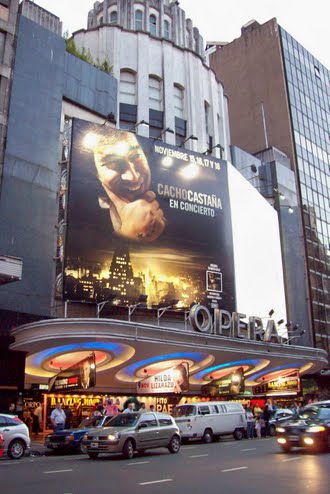 The Teatro Opera (Opera Theatre) is a prominent cinema and theatre house in Buenos Aires, Argentina.
The Opera Theatre was developed in 1871 by Antonio Petalardo, a local businessman who foresaw a need for popular theatre catering to the city's booming population in... - Tango With Cows: Ferro-Concrete Poems (Russian; Танго С Коровами: Железобетонныя Поэмы) is an artists' book by the Russian futurist poet Vasily Kamensky, with additional illustrations by the brothers David and Vladimir Burliuk . Printed in Moscow in 1914 in an...
Share this Post
latest post
-
 Cha Chas Richmond October 20, 2026
 -
 Argentine Tango Festivals October 12, 2026
 -
 Best Argentine Tango Dancers October 4, 2026
 -
 ID Cha House September 26, 2026
 -
 Argentine Tango steps list September 18, 2026
 -
 Gilles Marini Argentine Tango September 10, 2026
 -
 Yum Cha in Canberra September 2, 2026
 -
 Yum Cha Chinese Restaurant August 25, 2026
 -
 Argentine Tango music history August 17, 2026