
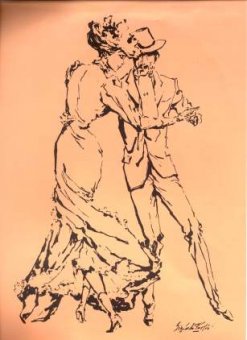
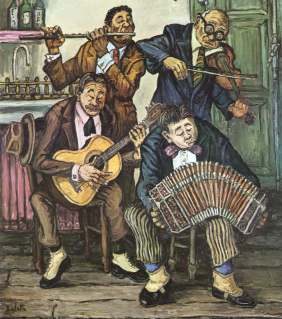
 inside belated 1800’s, millions of European immigrants appeared on shores of Rio de los angeles Plata in South America, inside two port places of Montevideo, Uruguay and Buenos Aires, Argentina. Many were Italian and Spanish, therefore the vast majority had been solitary teenage boys trying to make their fortunes in the us. They introduced their particular songs: the nice sounds associated with violin, the driving flamenco guitar, the strange mournful wail regarding the bandoneon – and their particular dances: the waltz, the mazurka, the polka – and mixed all of them with the Argentine folk music and party, because of the Cuban habanera, aided by the African candombe rhythms through the freed slaves’ street events. With not many females around, several teenagers found on their own seeking pleasure inside bordello areas for the burgeoning port locations. The tango dance arose within these seedy waterfront areas out of this turbulent mix, becoming a “mating party” between barmaids and their customers in questionable nightclubs. Shunned by the top and middle courses in Argentina, it nonetheless became a sleazy fixture of urban nightlife in Buenos Aires. Young men in area gangs would practice the measures together in order to become skilled adequate to win the attentions of a woman. A novice would often dance the follower’s part for 6 months to a year before becoming shown how-to lead.
 As Argentina became extremely rich around the turn of this century, the sons of wealthy households would usually choose adventure and excitement in harsher parts of city, and discovered the tango as part of their particular escapades. Some of these teenagers of privilege would present the tango as a delicacy because of their buddies to their sojourns to Paris, then social capital worldwide. The Parisians had been shocked and titillated by this natural, sensuous dance. This generated a “tango craze” that swept all European countries, and reached America in the many years before World War I. nyc newsprints in 1916 function adverts from over seven-hundred tango organizations. While the initial tango was disturbing to many arbiters of great style, a heavily sanitized type of tango found its way to the European and American dance academies, where it continues to be a fixture in ballroom tournaments these days.
However in Argentina, the blessings associated with the tango-mad folks of Paris led to an acceptance of the initial homegrown tango throughout courses of society. Tango artists found themselves raised from roughneck road performers to respected and adored composers. The tango party became the courtship ritual of middle class. When you look at the ’40’s, the “Golden Age” of tango, each night found half a million individuals moving from midnight until three or four each day. Top tango orchestras could be booked for longer than a year beforehand. Each community would feature its difference of tango, and intense rivalries often turned dance competitions into riots concluded because of the police. Fancy unwritten rules of behavior when you look at the “milongas” or dance gatherings became just as much a part of tango since the dance it self.
Impacted by the rise of repressive armed forces dictatorships in Argentina after World War II, tango dance gradually declined when confronted with curfews and clampdowns on general public gatherings. Tango songs created a rich brand-new concert-hall custom, progressively taken from the dance. The tradition of late-night dance moved underground, and almost all the normal milongas shut their doorways.
RELATED VIDEO
Share this Post
latest post
-
 Argentine Tango Festivals October 12, 2026
 -
 Best Argentine Tango Dancers October 4, 2026
 -
 ID Cha House September 26, 2026
 -
 Argentine Tango steps list September 18, 2026
 -
 Gilles Marini Argentine Tango September 10, 2026
 -
 Yum Cha in Canberra September 2, 2026
 -
 Yum Cha Chinese Restaurant August 25, 2026
 -
 Argentine Tango music history August 17, 2026
 -
 Latin Dance classes Chicago August 9, 2026